
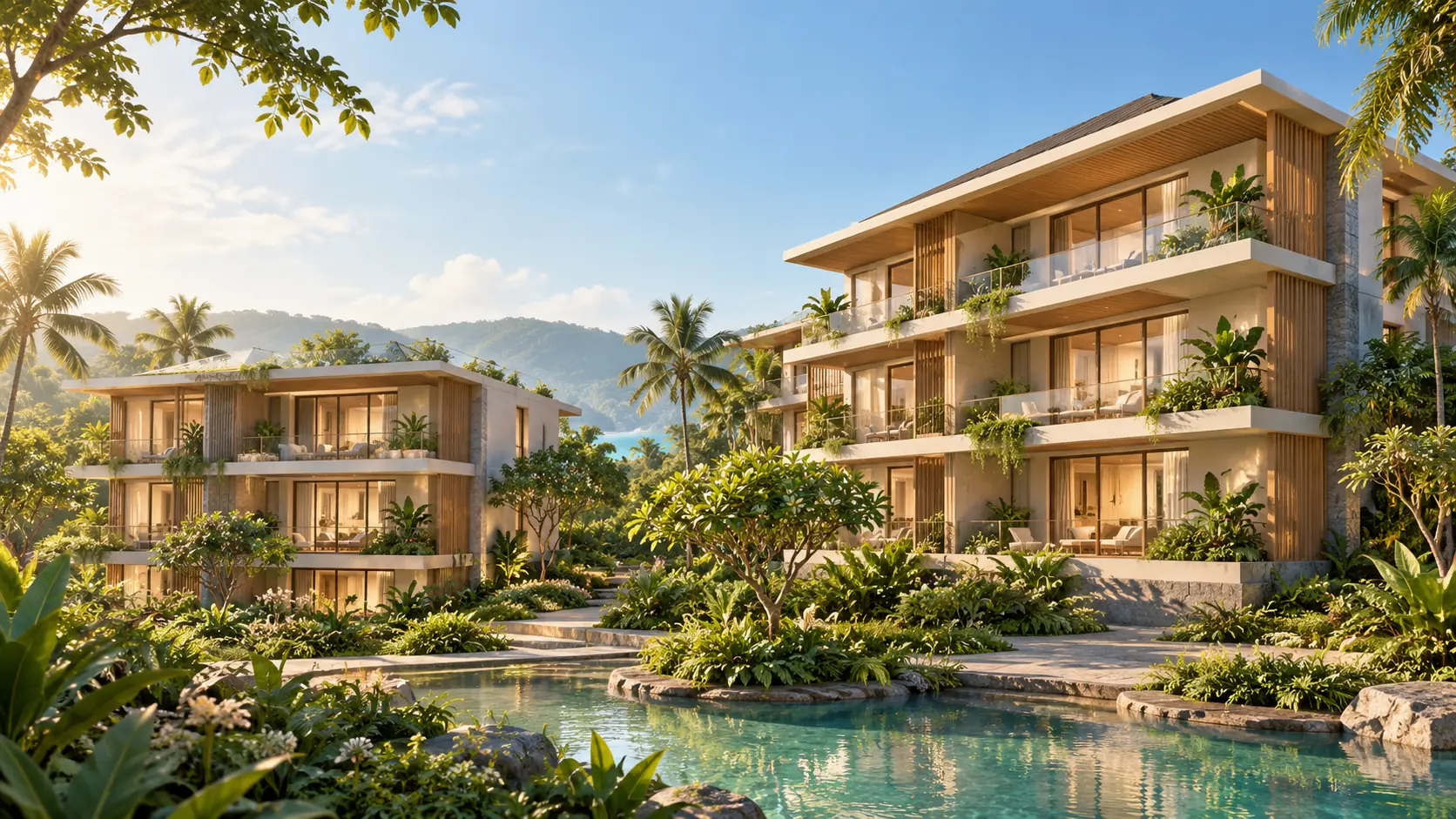
Choosing between a 1 bedroom vs 2 bedroom condo for Phuket investment comes down to your goal and the data you can obtain, not to a universal winner. We found no public, verifiable evidence that one unit type performs better than the other in general, so this guide gives you a framework instead of a verdict.
It shows you how to define what you want from the unit, what size changes in practice and which questions to put to the operator. It contains no prices, no return figures and no claim about which type earns more.
Start With the Goal, Not the Floor Plan
Most buyers begin by comparing layouts. A better start is to decide what the unit is for. Three goals cover most buyers.
- Income-led. You want the unit to work as a hotel-managed rental, and you will use it only occasionally.
- Use-led. You plan to stay often, perhaps for a season each year, and rental is a way to offset costs.
- Balanced. You want regular stays and also expect the unit to be available to guests for much of the year.
Each goal favours different questions. An income-led buyer needs evidence about guests, rates and costs. A use-led buyer needs space for family and a layout that feels comfortable over weeks, not days. A balanced buyer needs to understand how owner stays and guest bookings share the same calendar.
Write your goal down before you look at any brochure, and note how long you expect to hold the unit. A good-looking floor plan should not decide for you, and a goal on paper gives you something to test every answer against. If your goal changes later, you will also see which assumptions need revisiting.
What the Published Sizes Tell You
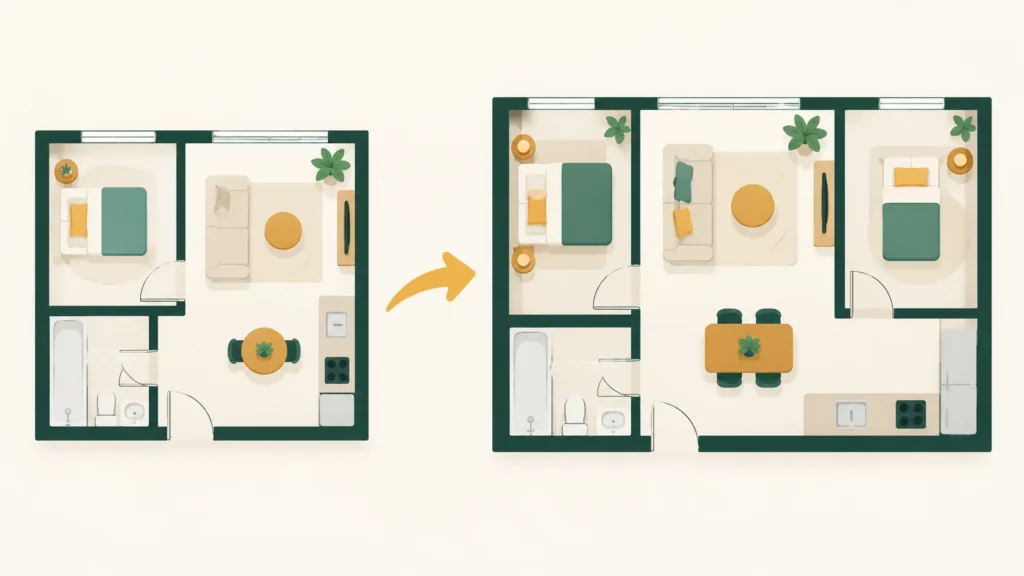
The Trees Residence publishes two unit types: a one-bedroom of 37.28 sqm and a two-bedroom of 55.03 sqm. For layouts and published unit details, see the The Trees Residence project overview.
Those sizes tell you how much space you get. They do not tell you the price, what the unit earns or what it costs to run. It is tempting to divide a price by an area to compare the two. We do not do that here. A single figure like that ignores floor, view, phase, furnishing and fees, and it blends one-off cost with ongoing cost.
Use size for what it can answer:
- Does the layout suit the people who will actually use it?
- Is there room for luggage, work and a second sleeping space?
- Does the second bedroom add value for you, or just add cost?
Who Might Stay in Each Unit Type?
Treat the following as working assumptions to test, not market data.
- One-bedroom. A solo traveller, a couple, or an owner who stays alone or as a pair. Stays may suit a shorter break.
- Two-bedroom. A family, two couples sharing, a remote worker who needs a separate room, or a longer stay where privacy matters.
These guest groups are a hypothesis, and guests do not always fit them. A couple may prefer the second bedroom for space, and a family may choose the smaller unit for a short stay. The useful step is to ask the operator which guests actually book each type, how long they stay and what they ask for. If the operator cannot say, you have learned something important: the choice rests on assumption.
Costs That Can Change With Unit Size
A larger unit can change the cost side as well as the revenue side. Ask for the fee schedule in writing and check how each line is calculated.
- Common-area fee. Is it based on floor area, or is it a flat charge per unit?
- Sinking fund. How is it calculated, and does it change with the unit?
- Management fee. Is it a share of revenue, a fixed charge or a mix?
- Housekeeping and laundry. Does the charge depend on unit type or on the number of rooms?
- Utilities. How are they billed to the owner and to guests?
- Furniture and equipment. Who pays to replace them, and when?
- Insurance. What does the building policy cover, and what does an owner need separately?
Our guide to the hotel-managed residence model explains how these fees fit into the structure. To compare gross and net results on equal terms, use our worksheet in comparing gross and net returns in Phuket.
Entry Cost, Resale and Management
Entry cost. Ask for the latest price list for both unit types and keep it with your notes. Prices change, so this article quotes none.
Resale. A future buyer will have their own goal. Ask how many resale listings exist in the project today, how long they stay listed and how the unit types compare. You can check public listings yourself, and the answer tells you more than a general rule.
Mix of unit types. If most units in a project share one type, yours competes with many similar units. Ask for the mix so that you know what you are competing with, and whether more units will be released.
Management and owner stays. Ask how owner stays are booked, what notice is needed and whether blackout periods apply. Ask whether the cleaning charge for an owner stay depends on unit size. Owner-use rules apply to either unit type, but their cost can differ. Keep a written copy of the rules you are given, because they can be updated.
A Simple Decision Framework
Work through these steps in order and keep your answers in one note.
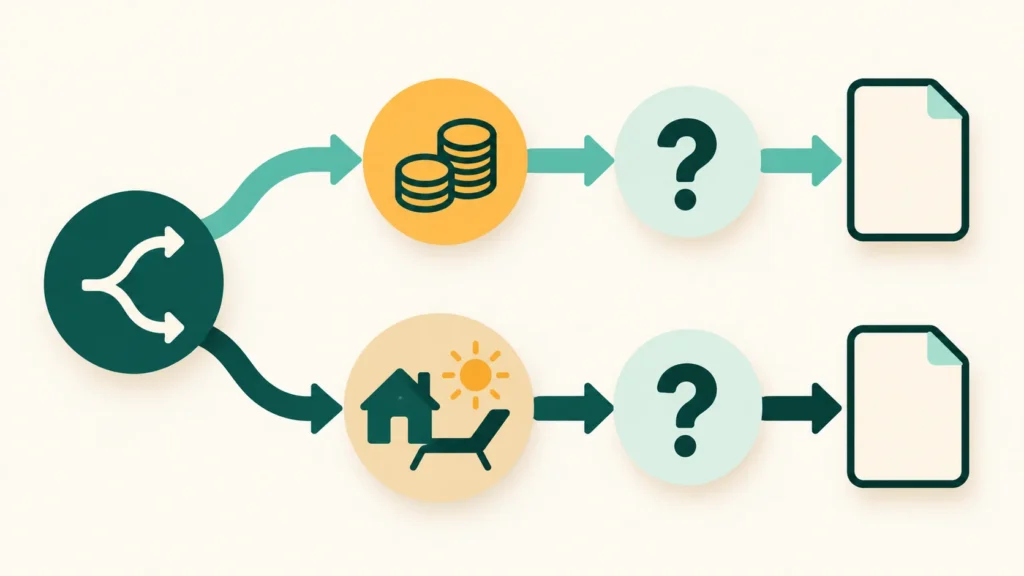
- Write your goal. Income-led, use-led or balanced.
- Estimate your own use. Decide how many weeks a year you would stay, and with whom.
- Collect both price lists. Do not compare until you have current figures for each type.
- Request operator evidence by unit type. If it does not exist, record “unknown” instead of guessing.
- Compare net results with the same worksheet. Use the same assumptions for both types.
| If your priority is | Answer this first | Evidence to request |
|---|---|---|
| Income | Which guests book each type? | Operator history by unit type |
| Owner use | How many people and how long? | Layout and owner-stay rules |
| Lower entry cost | What is the total cost, not just price? | Price list and fee schedule |
| Resale | Who is the next buyer? | Current resale listings in the project |
| Simple management | How much of the work is the operator’s? | Management agreement terms |
Questions to Ask the Operator and Developer
Put these to the operator or developer, and ask for answers in writing.
- Do you hold performance history for each unit type, and for which period?
- How are occupancy and average room rate reported to owners, by type or combined?
- How is net income calculated, and does the method differ by unit type?
- Is the common-area fee calculated on floor area or per unit?
- What does the sinking fund cover, and how is each unit’s share set?
- What do owner stays cost, and does the cost depend on the unit type?
- What is the mix of unit types in the project?
- Can the management agreement be transferred to a buyer if I sell?
For a fuller clause-by-clause reading list, see our guide to hotel residence management agreements.
How The Trees Residence Fits This Picture
The Trees Residence offers both unit types, with published sizes of 37.28 sqm and 55.03 sqm. It is presented as a hotel-managed premium residence, fully managed by a professional hotel operator. The brochure lists hotel services for owners, including concierge, housekeeping, laundry and maintenance.
If you are comparing the two unit types here, ask the sales team for the current price list and whether the operator can share any performance history by unit type. Ask also how the fees above are calculated for each type. The team can confirm what is available today.
Frequently Asked Questions
Is a 1 bedroom or 2 bedroom condo better for investment in Phuket?
Neither wins in general. We found no verifiable public evidence that one type performs better, so the answer depends on your goal, your costs and the operator’s data by unit type. Use the framework above and ask for evidence in writing.
What are the unit sizes at The Trees Residence?
The published sizes are 37.28 sqm for the one-bedroom and 55.03 sqm for the two-bedroom.
Does a larger condo earn proportionally more?
We cannot say, and no one should promise it without unit-level data. Earnings depend on how the operator prices and markets each type, and on the costs that apply to it.
Should I compare condos by price per square metre?
Only as a rough check. A price-per-area figure leaves out floor, view, furnishing, phase and fees. Compare the total cost of ownership and the net results from the operator’s data instead.
What should I ask before choosing a unit type?
Ask for operator history by unit type, how the common-area fee and management fee are calculated, what owner stays cost and whether the management agreement transfers on resale.
Final Takeaway
Decide what the unit is for, then let evidence by unit type, not assumptions about guests, choose the layout.
A smaller unit and a larger unit can both suit a sound plan. Which one fits you depends on your goal, your own use, the fees that follow size and the data the operator can show you.
If Bang Tao is on your shortlist, explore The Trees Residence or ask the team for the current price list and unit details.
Information note: This article is general information, not legal, tax or financial advice. It contains no prices, return figures or forecasts, and it makes no claim about which unit type performs better. Unit sizes are as published by The Trees Residence and are subject to change. Check fees, terms and availability with the operator and developer, and take independent professional advice before you buy.
Image note: Images in this article are AI-assisted illustrations, including visuals based on The Trees Residence architectural renderings. They are not photographs of the completed project.
Find Your Private Sanctuary in Bangtao
Speak with our team to explore ownership opportunities at The Trees Residence by Anocha.