
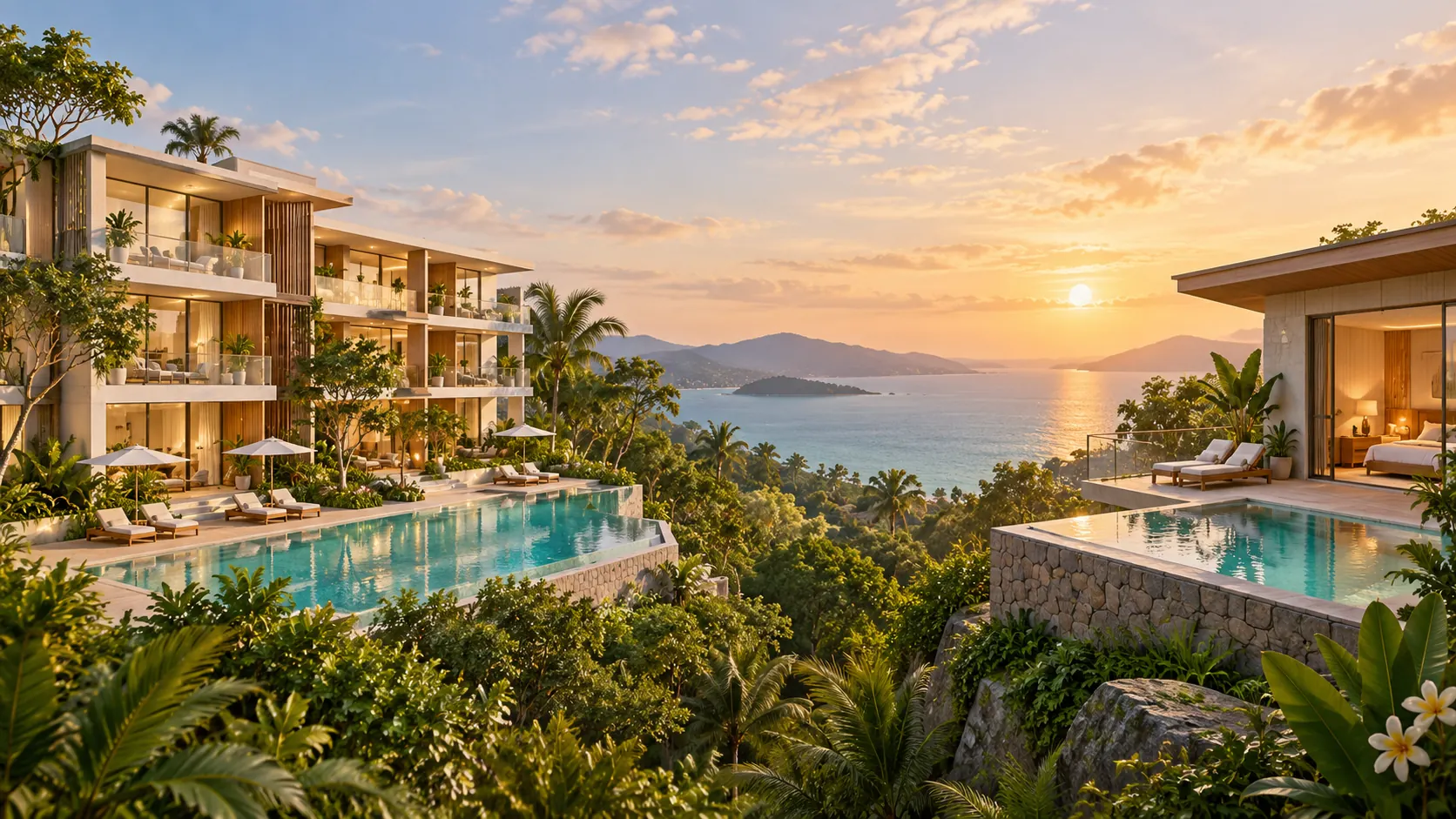
The condo vs villa Phuket decision comes down to two things: what a foreign buyer can legally hold, and how much of the day-to-day running you want to take on yourself. A foreigner can own a condominium unit within the building’s foreign share. A villa stands on land, and the Land Code limits land ownership by foreigners to narrow cases.
The rest follows from that difference: who maintains what, the yearly costs, renting out and selling later. For the full legal background, read can foreigners buy property in Thailand. If you are also weighing a branded residence, our guide to branded residences in Phuket covers that model.
Condo vs Villa Phuket at a Glance
| Question | Condo unit | Villa |
|---|---|---|
| What a foreigner can hold | The unit title, within the building’s foreign share | Land only in narrow cases; otherwise rights such as a registered lease of the land |
| Who runs shared areas | The condominium juristic person and its manager | You, or a manager you hire |
| How shared costs are set | Owners share common expenses by ownership ratio or the building regulation | Your own budget and contracts |
| Rules on use | The condominium regulation | The lease terms and local rules |
| Short stays for paying guests | Hotel Act licensing applies | Hotel Act licensing applies |
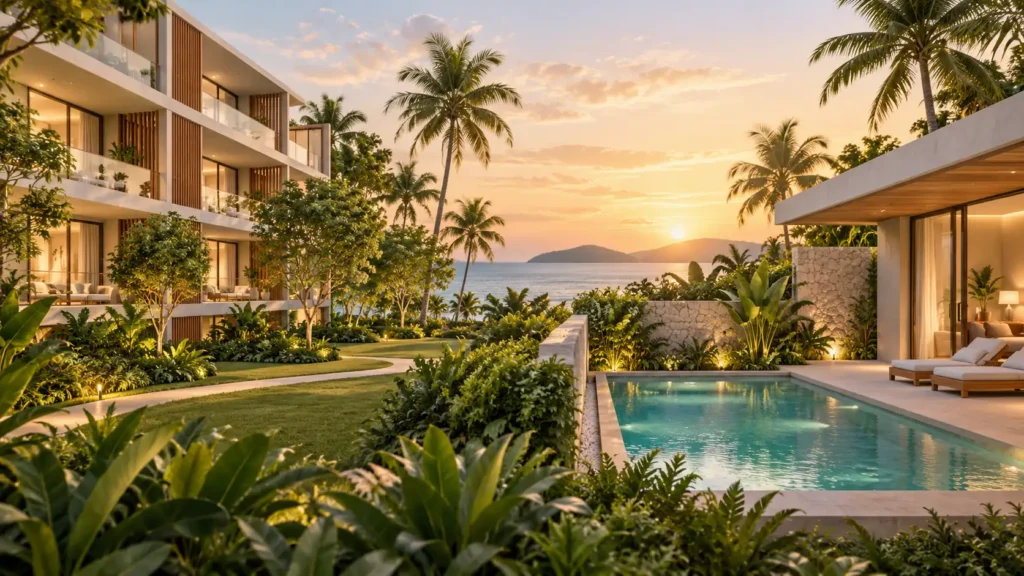
Ownership: A Unit Title or Rights Over Land
With a condo, you can own the unit itself. The condominium unit title deed covers your unit and a co-ownership share in the common property, including the land the building stands on. Foreign owners together may hold no more than 49% of the combined unit area in the building, so before you reserve, ask the juristic person for its letter on the foreign proportion.
With a villa, the land comes first. Section 86 of the Land Code ties land acquisition by foreigners to treaty rights and ministerial permission. Section 96 bis allows up to one rai for a home with an investment of at least 40 million baht and the Minister’s permission. Outside those cases, a foreign villa buyer is looking at other rights:
- A lease of the land, for up to 30 years at a time, renewable for up to 30 years from the renewal date.
- Registration of that lease, because a lease longer than three years that is not written and registered can be enforced for three years only.
- A superficies, the right to own buildings on someone else’s land, which the landowner can grant.
Put the same question to both options: what will you hold on the day you buy, and what will you hold in year 31? A unit title has no lease term to run down. A lease depends on how its renewal is written and registered. Ask your lawyer about that point before you pay.
Avoid any offer to put land in a Thai person’s or company’s name for you. The Land Code makes acquiring land as an agent of a foreigner an offence.
Upkeep: Who Does the Work
In a condo, upkeep is shared. Under the Condominium Act the juristic person manages and maintains the common property. A manager carries out the work, and a committee of owners elected at the general meeting oversees it. Owners hold an ordinary general meeting once a year to approve the accounts. Inside your unit, the repairs are yours.
With a villa, all of it is yours: the roof, the pool, the garden, the drains, air conditioning and pest control. You can do it yourself, hire staff or pay a villa management company. The work carries on while you are away. Phuket’s southwest monsoon brings cloudy, rainy weather from about mid-May to mid-October, so plan roof, gutter and drain checks before the rains start.
In a condo, the general meeting decides on shared repairs and what they cost. In a villa you decide, and you organise the work as well.
Running Costs to Budget For
Neither option has a standard cost, so build a budget from the documents for the property you are considering.
For a condo, start with common expenses. Owners share them in proportion to their ownership of the common property, or as the building regulation sets out. The Act also allows a late-payment surcharge of up to 12% a year. After six months or more of arrears, the surcharge can rise to 20% a year, and the owner’s services, use of common property and voting rights can be suspended. Ask for the current fee schedule and the last annual accounts. Our guide to owning a condo in Thailand explains common fees and the sinking fund.
For a villa, list each cost yourself:
- Maintenance contracts for the pool, garden and equipment
- Staff or a management company
- Utilities and internet
- Building and contents insurance
- Repairs and replacement of furniture and fittings
- Lease payments and renewal costs, if the land is leased
Both options have one-off costs at purchase. Our guide to the condo transfer fee in Thailand covers the condo side. For a villa lease, ask the Land Office or your lawyer which fees and taxes apply to registering it.
Security and Daily Life
In a condo, the juristic person manages the common property, so any building security is arranged through it and paid for from common expenses. Ask how access works, who is on site at night and how visitors are handled.
In a villa you set up security yourself: locks, lighting, alarms, cameras and someone to check the house while you are away. A villa in a managed estate may have a shared gate and patrol. Ask what is included and who pays for it.
Day to day, a condo puts shared facilities such as a pool or gym inside the building, with neighbours close by. A villa gives you more room and privacy, and more decisions to make.
Renting Out a Condo or a Villa
The Hotel Act applies to both. It defines a hotel as accommodation set up as a business to provide temporary accommodation for travellers or other people in exchange for payment. No one may run a hotel business without a licence. The definition excludes accommodation provided for a service charge paid monthly or longer. Our guide to daily rental rules for Phuket condos explains what this means for short stays.
In a condo, the building regulation also governs how units and common property are used, so read it before you plan any rental. In a villa, the lease terms may limit subletting, because a tenant may not sublet without the landlord’s agreement in the lease.
If a foreign guest or tenant stays, the person who houses them (the owner, the occupier or the hotel manager) must notify immigration within 24 hours under the TM30 rule, which can be done through the Immigration Bureau’s TM30 online service.
Selling Later
A condo unit can be sold to a Thai buyer or to a foreign buyer. A foreign buyer needs room in the building’s foreign share and evidence that the money came from abroad. The seller also needs a certificate from the juristic person that no common expenses are owed.
A villa held on a lease is sold by transferring the lease, which you can do only if the lease allows it. The buyer takes over the remaining term, so the time left on the lease and the renewal wording are likely to affect what a buyer will pay. Our guide to income, growth and exit covers exit planning.
The Trees Residence as an Example
The Trees Residence in Bang Tao is a third model. It presents itself as a hotel-managed premium residence and says on its homepage that it is not a condominium. Each unit is registered at the Land Office under a partial lease, for an initial 30 years with two consecutive 30-year renewals, a possible total of up to 90 years, transferable if the unit is sold. The brochure says renewals are subject to the laws in force and to registration at the time.
The website lists hotel services for owners, including concierge, daily housekeeping and maintenance, from a professional hotel operator. The brochure lists shared facilities such as two pool zones, a fitness room, a kids club and a co-working space. That puts it closer to a condo on upkeep and closer to a lease on ownership. Ask the team for the lease, the renewal addendum and the management terms, and read them with your lawyer. See the project overview for more.
Frequently Asked Questions
Is a condo or a villa better for a foreign buyer in Phuket?
It depends on what you want from the property. A condo lets a foreigner own the unit within the building’s foreign share, while a villa usually means rights over land, such as a registered lease. Choose by the ownership you need and the upkeep you are willing to handle.
Can a foreigner own a villa in Phuket?
The land is the obstacle. The Land Code limits land ownership by foreigners to narrow cases. A foreign buyer can lease the land instead, and the Civil and Commercial Code lets a landowner grant the right to own buildings on it.
Are condo fees higher than the running costs of a villa?
There is no general answer. Condo owners share common expenses by ownership ratio, while a villa owner pays every cost directly. Compare a full budget for each property.
Can I rent out my condo or villa to holiday guests?
Check the law before you plan any short stays. The Hotel Act requires a licence to run a hotel business, and a condo’s regulation can add its own rules.
Which is easier to sell, a condo or a villa?
It depends on who the buyer is. A foreign buyer of a condo needs room in the foreign share, and a villa lease can be transferred only if its terms allow it.
Final Takeaway
Condo vs villa Phuket is a choice between a unit title with shared upkeep and rights over land with more control and more work.
Write down what you would hold, who would maintain it, what it would cost each year and how you would sell it. Get the documents for each answer, and have a Thai lawyer check the ownership part before you pay.
If a managed residence in Bang Tao is on your list, explore The Trees Residence and ask for the lease and management documents before you arrange a viewing.
Legal note: This article is general information only. It is based on the Thai texts of the Condominium Act, the Land Code and the Civil and Commercial Code published by the Office of the Council of State, an unofficial English translation of the Hotel Act hosted by the Department of Provincial Administration, and the Immigration Bureau’s TM30 guide, read in October 2026. It is not legal, tax or financial advice. Laws and their interpretation change, and the Thai text is the only authoritative version. Confirm your position with a qualified, independent Thai lawyer before you sign or pay anything. Details of The Trees Residence come from the developer’s website and brochure and are subject to change.
Image note: Images in this article are AI-assisted illustrations, including visuals based on The Trees Residence architectural renderings. They are not photographs of the completed project.
Find Your Private Sanctuary in Bangtao
Speak with our team to explore ownership opportunities at The Trees Residence by Anocha.