
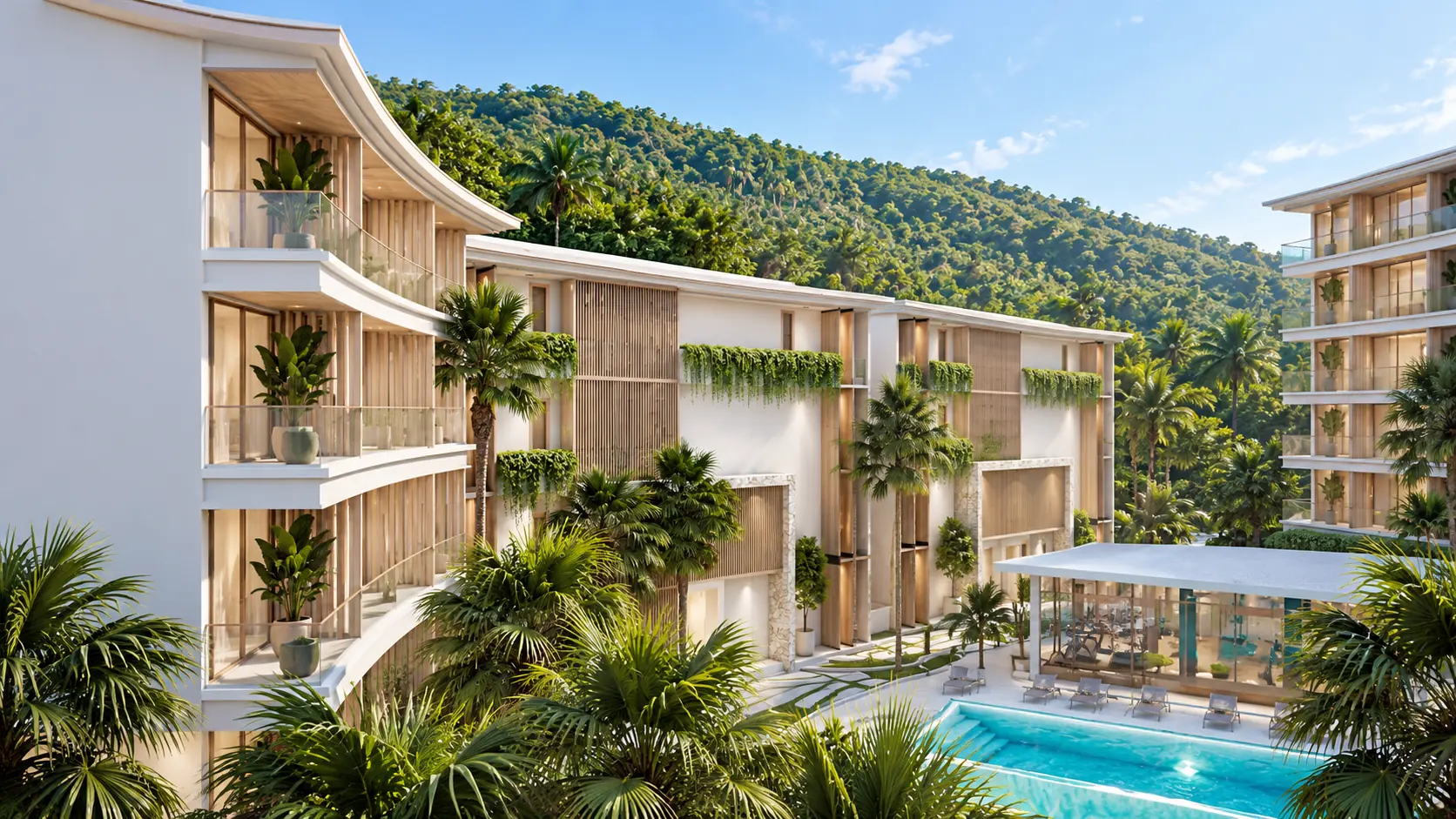
Can foreigners buy property in Thailand? Yes, but what you can hold in your own name depends on the type of property. A foreigner can own a condominium unit outright, as long as the building’s foreign share still has room. Land is different: the Land Code lets foreigners acquire land only in narrow cases. A long lease gives you a right to use land or a building for a fixed term while the owner keeps the title.
Below, each property type is matched to the Thai law that governs it, with links to the official texts. This is general information, not legal advice, and a Thai lawyer should check any purchase before you pay. If you have already chosen a condo and want the steps, read how to buy a condo in Phuket as a foreigner.
Can Foreigners Buy Property in Thailand? The Short Answer
The rules differ by property type:
| Property | Can a foreigner hold it? | Main rule |
|---|---|---|
| Condominium unit | Yes, as owner, if the building’s foreign share has room | Condominium Act s.19 and s.19 bis |
| Land | Only in narrow cases, with ministerial permission | Land Code s.86 and s.96 bis |
| Lease of land or a building | Yes, as tenant, for up to 30 years at a time | Civil and Commercial Code s.538 and s.540 |
| A building on someone else’s land | A landowner can grant a right to own buildings on the land | Civil and Commercial Code s.1410 |
| Land held by a Thai person for you | No. The law treats it as an offence | Land Code s.96 and s.113 |
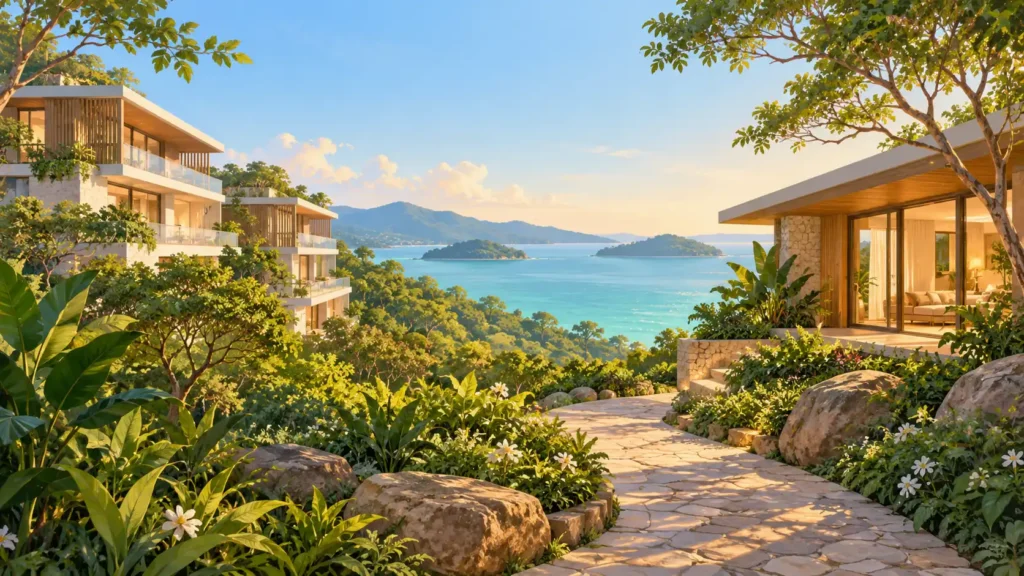
Condominium Units and the Foreign Limit
The Condominium Act lists which foreigners may own a unit. If you are paying from overseas, the group that applies to you is foreigners who bring foreign currency into Thailand, or who pay from a non-resident baht account or a foreign currency account. The list also includes foreigners with permission to reside in Thailand under immigration law, and certain investment-promoted people and companies.
Each building has a limit. Foreign owners together may hold no more than 49% of the combined area of all units in the condominium, measured when the building was registered. The Land Office registers a transfer to a foreign buyer only if the foreign share stays within that limit after the sale.
You do not have to work the share out yourself. The buyer asks the condominium juristic person for a letter confirming the foreign proportion, and that letter goes to the Land Office with the transfer.
At the transfer, a foreign buyer also shows evidence of bringing foreign currency into Thailand, or of paying from one of the qualifying accounts, for an amount not less than the price of the unit. The government portal says banks issue a Foreign Currency Transaction Form for remittances of USD 50,000 or the equivalent. Our guide to the FET form covers that step.
What you receive is a condominium unit title deed. Under the Act it is the document of title to your own unit and to a co-ownership share in the common property, such as the land under the building. The government portal cites the Condominium Act 1979 and says it concerns freehold ownership.
Land: What the Land Code Says
Section 86 of the Land Code sets the basic rule. A foreigner may acquire land only under a treaty that grants the right to own immovable property, and subject to the Code. Land for a home, a business or other listed uses also needs the Minister’s permission under ministerial regulations. Ask your lawyer whether any treaty right applies to your nationality before you rely on this route.
Section 96 bis adds one more route. A foreigner who brings in an investment set by ministerial regulation, of at least 40 million baht, may acquire up to one rai of land for a home, with the Minister’s permission. The conditions include keeping the investment for at least three years. The land must be in Bangkok, Pattaya City, a municipality or a residential zone. This is a formal application with conditions, and you cannot arrange it at a sales office.
The Code also deals with land acquired outside these rules. A foreigner who acquires land unlawfully or without permission must sell it within a period the Director-General sets, between 180 days and one year. If the land is not sold in time, the Director-General may sell it.
Long Leases of Land and Buildings
A foreigner can take a lease of land or a house as tenant, and the Civil and Commercial Code sets the limits.
- A lease of immovable property may not run for more than 30 years. A longer term is cut back to 30 years. When the term ends, the lease may be renewed, but not for more than 30 years from the renewal date.
- A lease for more than three years must be in writing and registered with the competent official. Otherwise it can be enforced for three years only.
- If the landlord sells the property, the lease continues and the new owner takes over the landlord’s rights and duties.
- You may not sublet or transfer your rights as tenant unless the lease allows it.
When you plan an exit, check that the lease lets you transfer it to a buyer, and on what conditions. Ask your lawyer to explain how any renewal promise is written and registered, because the renewal is a separate step from the first 30-year term.
Houses and Villas: The Building and the Land
With a house, the question splits in two: the land and the building on it. The Land Code limits apply to the land.
For the building, the Civil and Commercial Code lets a landowner create a superficies for another person. That right lets the holder own buildings, structures or plantations on or under someone else’s land. Unless the agreement says otherwise, the right can be transferred and inherited, and it can run for a fixed period or for a person’s lifetime.
If you are looking at a villa, you need two answers in writing: what right you will have over the land, such as a registered lease, and who will own the house. Our condo vs villa comparison covers the practical side: upkeep, costs, security and renting out.
Nominee Arrangements and Why the Law Forbids Them
Some sellers or agents suggest that a Thai person or a Thai company could hold land for a foreign buyer. Three provisions deal with this.
- Under the Land Code, if a person acquires land as owner on behalf of a foreigner, the Director-General may sell the land.
- Acquiring land as an agent of a foreigner is a criminal offence under the Land Code, punishable by a fine, imprisonment or both.
- Under the Foreign Business Act, a Thai person who holds shares on behalf of a foreigner so the foreigner can run a business while avoiding the Act commits an offence, and so does the foreigner who agrees to it. Penalties include imprisonment, fines or both, and the court orders the shareholding to end.
If anyone proposes an arrangement like this, stop and take advice from an independent Thai lawyer who acts only for you.

The Trees Residence as an Example
The Trees Residence in Bang Tao presents itself as a hotel-managed premium residence and says on its homepage that it is not a condominium. Its website says each unit is registered individually at the Land Office under a partial lease, for an initial 30 years with two consecutive 30-year renewals, a possible total of up to 90 years, and that the lease is transferable if the unit is sold. The developer’s brochure adds that renewals are subject to the laws in force and to registration at the time.
So the lease section above is the one that applies. Ask the team for the draft lease, the renewal addendum and the registration details, and have your own lawyer check them against sections 538 and 540 of the Civil and Commercial Code. The project overview has the rest of the project details.
Frequently Asked Questions
Can foreigners own a condo in Thailand?
Yes. The Condominium Act lets listed foreigners own units, including those who bring the purchase money in as foreign currency. Foreign owners together must stay within 49% of the total unit area of each building.
Can a foreigner own land in Thailand?
Only in narrow cases. Section 86 of the Land Code ties land acquisition by foreigners to treaty rights and ministerial permission. Section 96 bis allows up to one rai for a home with an investment of at least 40 million baht and the Minister’s permission.
Can foreigners buy a house in Thailand?
The house and the land are separate questions. The land limits still apply, but the Civil and Commercial Code lets a landowner grant another person the right to own buildings on the land. Ask a lawyer to set up and register the structure.
How long can a lease of land in Thailand last?
Up to 30 years at a time, with a renewal of up to 30 more years from the renewal date. A lease longer than three years must be written and registered, or it can be enforced for three years only.
Can I put property in a Thai friend’s or company’s name?
No. Acquiring land as an agent of a foreigner is an offence under the Land Code. Holding company shares for a foreigner to get around the Foreign Business Act also carries criminal penalties.
Final Takeaway
Foreigners can buy property in Thailand, mostly as owners of condominium units or as tenants on registered leases, not as owners of land.
Start with the property type and find the law that governs it. Then ask for the document that proves your position: the juristic person’s letter on the foreign share for a condo, or the registered lease for land or a house. Have a Thai lawyer review it before you pay.
If you are comparing residences in Bang Tao, explore The Trees Residence and ask the team for the lease documents before you arrange a viewing.
Legal note: This article is general information only. It is based on the Thai texts of the Condominium Act, the Land Code, the Civil and Commercial Code and the Foreign Business Act published by the Office of the Council of State, and on Government Public Relations Department pages, read in October 2026. It is not legal, tax or financial advice. Laws and their interpretation change, and the English wording here is our summary of the Thai text, which is the only authoritative version. Confirm your position with a qualified, independent Thai lawyer before you sign or pay anything. Details of The Trees Residence come from the developer’s website and brochure and are subject to change.
Image note: Images in this article are AI-assisted illustrations, including visuals based on The Trees Residence architectural renderings. They are not photographs of the completed project.
Find Your Private Sanctuary in Bangtao
Speak with our team to explore ownership opportunities at The Trees Residence by Anocha.