
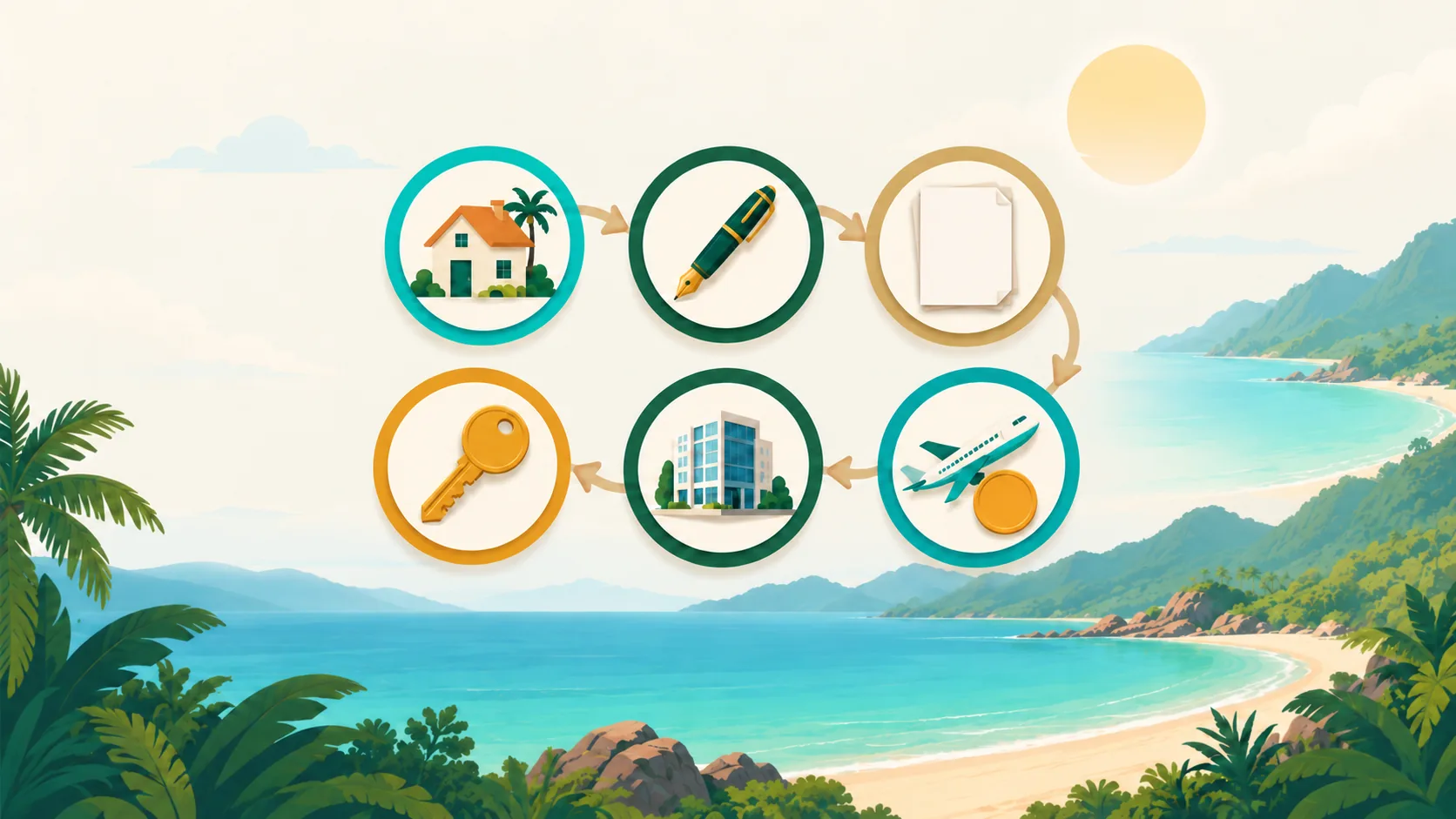
To buy a condo in Phuket as a foreigner, you check the project, reserve a unit, sign a sale and purchase agreement, bring the money in from abroad and register the transfer at the Land Office. The steps follow Thai law at each stage: the Condominium Act decides whether a foreigner can take the unit, and the Civil and Commercial Code makes a sale of property void unless it is written and registered.
Whether foreigners can buy at all, and which property types they can hold, is covered in our guide can foreigners buy property in Thailand. This is general information, not legal advice. Use your own Thai lawyer from the reservation onward.
Before You Buy a Condo in Phuket as a Foreigner: Check the Foreign Share
Two conditions decide whether the purchase can go ahead. First, you must fall into one of the groups the Condominium Act lists. If you are paying from overseas, the group that applies is buyers who bring the purchase money into Thailand as foreign currency, or who pay from a non-resident baht account or a foreign currency account.
Second, the building must have room in its foreign share. Foreign owners together may hold no more than 49% of the combined area of all units, and the Land Office registers a transfer to a foreigner only if the share stays within that limit. The buyer gets a letter from the condominium juristic person confirming the foreign proportion. Ask for that letter, or written confirmation that it will be issued, before you pay a deposit.
Step 1: Check the Project and the Seller
Find out exactly what you are buying. In a registered condominium, each unit has its own title deed covering the unit and a co-ownership share in the common property. Ask the seller whether the building is already registered as a condominium, who the juristic person and its manager are, and for a copy of the building regulation.
Check the seller too. If the seller is a Thai company, you can look it up on DBD DataWarehouse+, the company information service run by the Department of Business Development. Compare the company name with the name on the reservation form and the sale agreement.
If the building is not finished yet, extra checks apply, such as permits and the payment schedule during construction. Our guide to off-plan condos in Phuket covers them. Our Bang Tao investment property scorecard lists what else to ask for in writing.
Step 2: Reserve the Unit
If the seller asks you to sign a reservation form and pay a deposit, treat the form as a contract. Under the Civil and Commercial Code, an agreement to buy property can be enforced if there is written evidence signed by the party liable, or if a deposit has been paid, so the deposit on its own can make the agreement enforceable.
Before you sign, read:
- The unit number, floor and area
- The price and the date by which you must sign the full agreement
- Whether the deposit is refundable, and in which cases
- What happens if the building’s foreign share is full when you come to transfer
Send the form to your lawyer before you pay. Keep the receipt and a copy of everything you sign.
Step 3: Sign the Sale and Purchase Agreement
The sale and purchase agreement sets the terms up to the transfer. Your lawyer should read it in full, in a language you understand, before you sign. Check at least these points:
- Price, payment schedule and the bank account each payment goes to
- Transfer date and what happens if either side is late
- Who pays which fees and taxes at transfer (our condo transfer fee guide lists them)
- Common fees and any sinking fund payable at transfer (see our guide to owning a condo in Thailand)
- Defects, inspection before transfer and who repairs what
- Any rental or management agreement that comes with the unit
For a rental or management agreement, our management agreement checklist goes through the contract clause by clause.
Step 4: Bring the Money In From Abroad
How you pay affects whether you can register as owner. At transfer, a foreign buyer shows evidence of bringing foreign currency into Thailand, or of withdrawing from a non-resident baht account or a foreign currency account, for an amount not less than the price of the unit.
The government portal says banks issue a Foreign Currency Transaction Form for remittances of USD 50,000 or the equivalent. It also says a foreign buyer with permanent residence in Thailand may pay in Thai baht without it. Our FET form guide explains what to ask your bank for and when.
Talk to the receiving bank before you send money. Keep every bank document, because the Land Office will ask for them at transfer.
Step 5: Transfer at the Land Office
You become the owner when the transfer is registered, because a sale of immovable property is void unless it is made in writing and registered with the competent official.
At the Land Office:
- The seller declares the foreign owners in the building and the share of unit area they already hold.
- You present the juristic person’s letter on the foreign proportion and your evidence of funds from abroad.
- The seller presents the juristic person’s latest certificate that no common expenses are owed on the unit. The manager must issue it within fifteen days of a request once the debts are paid.
- The officer checks the documents and the foreign share, registers the transfer and gives you the condominium unit title deed.
The sale agreement says who pays which transfer fees and taxes, so check it before the day.
Step 6: After the Transfer
As a unit owner you co-own the common property and vote at general meetings. Owners share common expenses in proportion to their ownership or as the regulation provides. Late payment can carry a surcharge of up to 12% a year, and after six months or more of arrears, services and voting rights can be suspended.
Owners hold an ordinary general meeting once a year within 120 days of the end of the accounting period to approve the accounts and appoint an auditor. Changes to the regulation need a general meeting resolution.
If you plan to rent the unit out, check the law first. Running a hotel business needs a licence under the Hotel Act. Our guide to daily rental rules for Phuket condos explains short stays. If a foreign tenant stays, the owner or occupier must notify immigration within 24 hours under the TM30 rule.
Documents to Prepare
Your lawyer and the Land Office will tell you the current list. Keep these together from the start:
- Your identity documents as the Land Office asks for them, plus proof of your status in Thailand if you qualify through residence instead of funds from abroad
- The reservation form, the deposit receipt and the signed sale and purchase agreement
- Bank evidence of foreign currency brought into Thailand for at least the unit price, including any Foreign Currency Transaction Form
- The juristic person’s letter confirming the foreign proportion
- The seller’s certificate that no common expenses are owed

When the Residence Is a Registered Lease
Some Phuket residences are sold as long leases rather than condominium units. The Trees Residence in Bang Tao is one example: it presents itself as a hotel-managed premium residence and says it is not a condominium. Its website says each unit is registered individually at the Land Office under a partial lease, for an initial 30 years with two consecutive 30-year renewals, and is transferable if sold. The brochure adds that renewals are subject to the laws in force and to registration at the time.
The steps change in two ways. You register a lease, not a unit title, and a lease longer than three years must be in writing and registered to be enforced beyond three years. Resale works by transferring the lease, which is possible only where the lease allows it. Ask the team for the draft lease and the renewal addendum, and have your lawyer check them. The project overview has the project details.
Frequently Asked Questions
Can a foreigner buy a condo in Phuket?
Yes. The Condominium Act lets listed foreigners own units, including those who bring the purchase money in as foreign currency, as long as foreign ownership in the building stays within the limit.
How much of the price has to come from abroad?
At least the full price of the unit. The buyer shows evidence of foreign currency brought into Thailand, or of withdrawals from qualifying accounts, for an amount not less than the price.
What is the FET form?
The Thai government portal describes it as the Foreign Currency Transaction Form that a bank issues for remittances of USD 50,000 or the equivalent, and the buyer presents the bank’s certificates at the Land Office. Ask your bank what it issues for smaller amounts.
What if the building’s foreign share is full?
Then the Land Office cannot register the unit to a foreign buyer, because it checks that the foreign share stays within the limit. Get the juristic person’s letter before you pay a deposit.
Who pays the transfer fees?
The sale and purchase agreement decides. Check the fee clause with your lawyer, and read our condo transfer fee guide for the fee types.
Final Takeaway
To buy a condo in Phuket as a foreigner, confirm the building’s foreign share first, bring the full price in from abroad and keep every document for the Land Office.
Do the steps in order, and do not pay a deposit until your lawyer has read the reservation form. Keep the documents after the transfer too, because the Land Office or a future buyer may ask to see them.
If you are looking at Bang Tao, explore The Trees Residence and ask the team for the lease documents before you arrange a viewing.
Legal note: This article is general information only. It is based on the Thai texts of the Condominium Act and the Civil and Commercial Code published by the Office of the Council of State, Government Public Relations Department pages, an unofficial English translation of the Hotel Act and the Immigration Bureau’s TM30 guide, read in October 2026. It is not legal, tax, banking or financial advice. Laws, bank requirements and Land Office practice change, and the Thai text of each law is the only authoritative version. Confirm each step with a qualified, independent Thai lawyer and with your bank before you sign or send money. Details of The Trees Residence come from the developer’s website and brochure and are subject to change.
Image note: Images in this article are AI-assisted illustrations, including visuals based on The Trees Residence architectural renderings. They are not photographs of the completed project.
Find Your Private Sanctuary in Bangtao
Speak with our team to explore ownership opportunities at The Trees Residence by Anocha.