
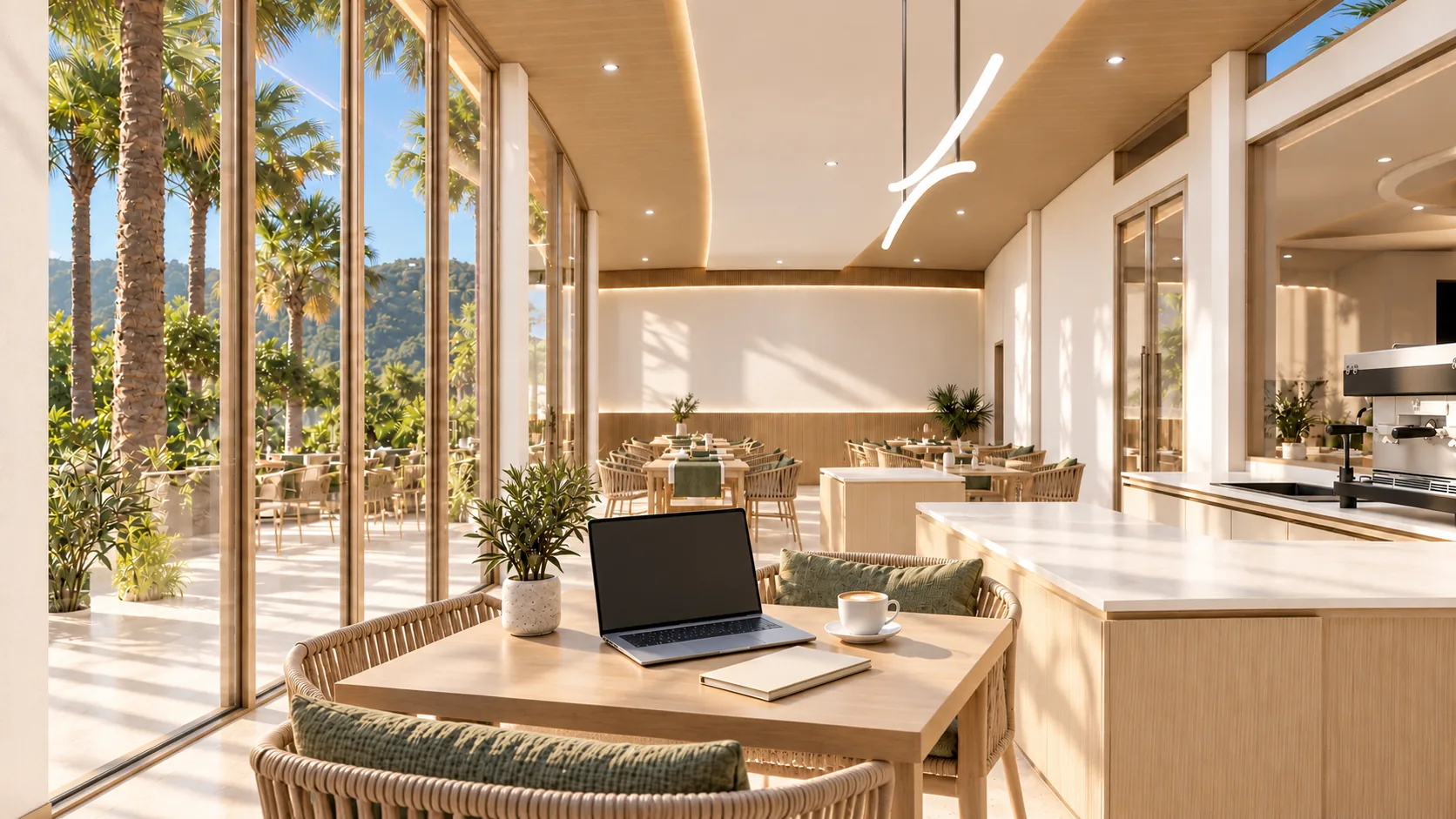
This digital nomad Phuket guide is for remote workers and freelancers planning a stay of several months. The visa comes first, because it sets how long you can stay. After that come the practical questions: internet, a desk you can work at, admin after you land and why Bang Tao is worth a look as a base.
Visa rules change. The visa details below come from official Thai government pages read on 29 October 2026, so check the current version before you apply.
What the Destination Thailand Visa (DTV) Covers
Thailand’s official e-Visa site lists the Destination Thailand Visa for “workcation” stays. It covers three groups: digital nomads, remote workers, foreign talent and freelancers; people taking part in Thai soft-power activities such as Muay Thai, Thai cooking courses or medical treatment; and the spouse and children under 20 of a DTV holder.
On the e-Visa site the DTV is a multiple-entry visa valid for 5 years. The Royal Thai Embassy in London gives the period of stay as 180 days per entry. You can extend once, for up to 180 days, through the Immigration Bureau. After that you have to leave Thailand, and you can come back on the same DTV while it is still valid.
DTV Documents and the 31 August 2026 Change
For the workcation category, the e-Visa site asks for the following:
- The biodata page of your passport.
- A photograph taken within the last six months.
- Proof of permanent residence in the country where you apply.
- Financial evidence: bank statements for the last three months with a minimum balance of 500,000 THB or equivalent, or a sponsorship letter.
- An employment contract or certificate, or a professional portfolio that shows your remote-work or freelance status.
- A certificate of criminal record clearance.
Two of those items are new. On 28 August 2026 the Department of Consular Affairs announced, in a notice reprinted by the Royal Thai Embassy in Moscow, that from 31 August 2026 applicants must give proof of permanent residence in place of a document showing their current location, and must add a criminal record clearance certificate. Applications submitted through the e-Visa system before 31 August 2026 are still processed under the old list.
Embassies can add their own conditions. London, for example, wants a police clearance certificate issued within six months of submission. The e-Visa site itself tells applicants to check the embassy or consulate’s website for the exact documents, and fees differ by embassy too.
Other Ways to Stay Longer
Depending on your plans, one of these may fit better than the DTV.
- For shorter trips, our guide to Thailand’s 30-day visa exemption explains what changed on 15 September 2026.
- The Board of Investment’s LTR visa has a Work-from-Thailand Professionals category for people employed by well-established overseas companies. It asks for a minimum average personal income of USD 80,000 a year over the past two years and sets rules on the employer, such as a listed company or a private company with at least 3 years of operation and combined revenue of USD 50 million over the last 3 years. BOI states that work permits are not granted in this category, because the holder works remotely for a foreign employer.
- The e-Visa site also lists Long-Term Resident visas and the Thailand Privilege Card among its categories.
Owning or renting property does not give you a visa. As our visa-exemption guide explains, your right to stay depends on the visa or permission you hold.
Digital Nomad Phuket Checklist: Internet, Power and a Real Desk
Check these before you sign a lease:
- Run a speed test at the desk where you will actually sit, at the time of your daily calls. The lobby at noon tells you little.
- Ask whether the building has backup power or a backup connection, and keep a mobile data plan of your own.
- Look for a proper desk and a chair you can sit in for hours. A door you can close helps on calls.
- Visit at the hours you work, because construction, pool parties and traffic noise change through the day.
- If your team is in Europe or the Americas, your working day may start late or run into the night. Pick a home where that is easy.
- Plan for rain. Thailand’s southwest monsoon runs from about mid-May to mid-October, and the start and end vary each year. On heavy rain days you will want a good indoor workspace. Our Bang Tao weather by month guide shows the wetter months.
Why Some Remote Workers Choose Bang Tao
Bang Tao is on Phuket’s west coast, and Laguna Phuket sits on Bang Tao Bay. For errands, Laguna lists services at Canal Village including a medical clinic, a pharmacy, a minimart, laundry and currency exchange. Porto de Phuket describes itself as an open-air lifestyle destination with shopping and restaurants.
Away from the desk, Laguna Park has a Lake Fit Trail for running and walking, and the Laguna Golf Phuket academy runs golf, tennis and fitness sessions. Our guide to things to do in Bang Tao has more.
If you plan to work from cafés or a coworking space, try them at your usual working hours first. Day passes, seating and opening hours change, so confirm them with the venue.
Admin After You Arrive
- Under the Immigration Act, the owner, occupier or manager of the place where a foreigner stays must notify immigration within 24 hours of arrival, using the TM30 form, which can be filed online. Ask your landlord or building who files it.
- Thailand’s emergency medical number is 1669. Save it with the address of your nearest clinic.
- Before you arrive, check what your health insurance covers in Thailand, including outpatient care and evacuation.
- If you need a reference exchange rate, the Bank of Thailand publishes daily rates.
Working From The Trees Residence
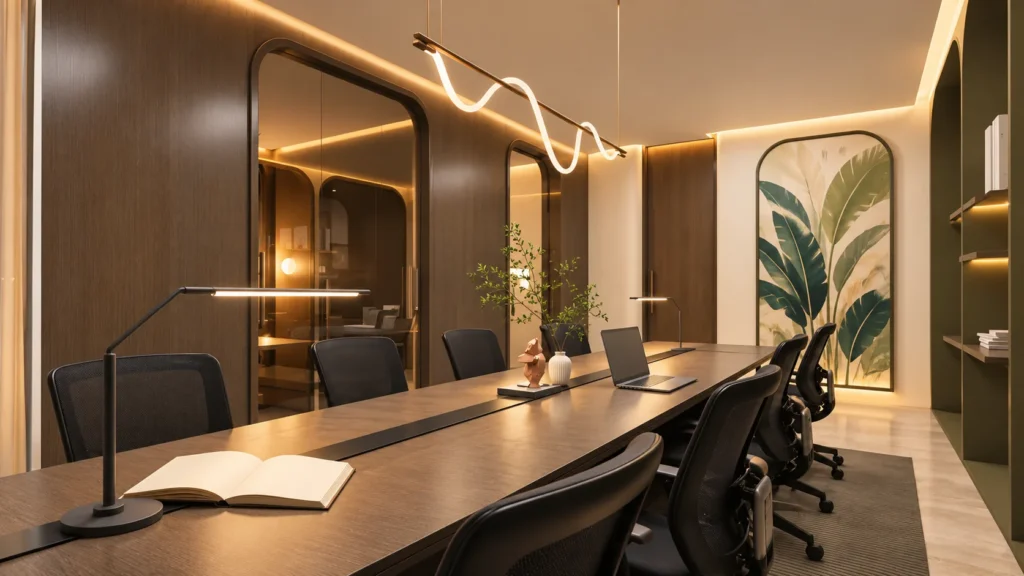
The Trees Residence is in Bangtao and describes itself as a hotel-managed premium residence. The developer’s brochure lists a co-working space and a library among the planned facilities, along with a café and restaurant, fitness, a sauna and two swimming pool zones. Hotel services on the homepage include daily housekeeping and laundry, so fewer chores eat into a long stay.
The one-bedroom residence is 37.28 sqm and the two-bedroom is 55.03 sqm. If you work long hours from home, the second bedroom can become a separate office. Ask the team which facilities will be open when you plan to arrive and how the internet will be supplied. The project overview has the background.
Frequently Asked Questions
Is there a digital nomad visa for Phuket?
Yes. Thailand’s Destination Thailand Visa (DTV) has a workcation category for digital nomads, remote workers and freelancers, and it applies to the whole country, Phuket included. Check the current rules on the official e-Visa site before you apply.
How long can I stay in Phuket on a DTV?
The Royal Thai Embassy in London states 180 days per entry, with one extension of up to 180 days through the Immigration Bureau. The visa itself is valid for 5 years with multiple entries.
What changed for the DTV on 31 August 2026?
From that date, applicants must provide proof of permanent residence instead of a current-location document, plus a criminal record clearance certificate.
Does buying a condo in Phuket give me a visa?
No. Owning property does not give you a right to stay. That depends on the visa or permission you hold.
Is there a long-term option for higher-earning remote workers?
The Board of Investment’s LTR visa has a Work-from-Thailand Professionals category, with a minimum average income of USD 80,000 a year over two years and rules on the overseas employer. Work permits are not granted in this category.
Final Takeaway
For a digital nomad, Phuket starts with the visa: check the current DTV rules on official Thai sites, then choose a home where you can actually work.
Test the internet at your desk, plan for the rainy season and make sure your address notification is filed. If you are looking at Bang Tao, explore The Trees Residence and ask the team about the co-working space, the internet set-up and a private viewing.

Visa information note: This article is general information only, not legal, immigration, tax or financial advice. Visa rules, documents and fees change, and each Thai embassy or consulate publishes its own checklist. The information was read on 29 October 2026 from the Thai e-Visa website (Ministry of Foreign Affairs), the Royal Thai Embassies in London and Moscow, and the Board of Investment LTR website. Confirm current requirements with the Thai embassy or consulate where you will apply, or with the Immigration Bureau, before you travel. Facilities and services at The Trees Residence are based on the developer’s brochure and website and are subject to change.
Image note: Images in this article are AI-assisted illustrations, including visuals based on The Trees Residence architectural renderings. They are not photographs of the completed project.
Find Your Private Sanctuary in Bangtao
Speak with our team to explore ownership opportunities at The Trees Residence by Anocha.